
What is the role of a teacher, in a world where AI can plan lessons, mark essays and provide detailed feedback?
That question – urgent, uncomfortable, and impossible to ignore, sat at the heart of the AI x EI Conference, held on 30 April 2026 at Westonbirt School. The event marked the official launch of the Wishford Centre for Innovation: a new home for educational research, forward-thinking ideas, and the kind of honest, rigorous debate that the pace of change in our schools demands.
Bringing together headteachers, senior leaders, academics and industry experts, the conference spent a day exploring the intersection of Artificial Intelligence and Emotional Intelligence. As AI grows increasingly capable, not merely automating repetitive tasks, but delivering content, managing assessment and providing feedback, the role of the human teacher is being fundamentally reimagined. What qualities do young people need to flourish in this new landscape? How do schools respond thoughtfully, rather than being swept along by the pace of technological change?

Building Tools That Actually Work
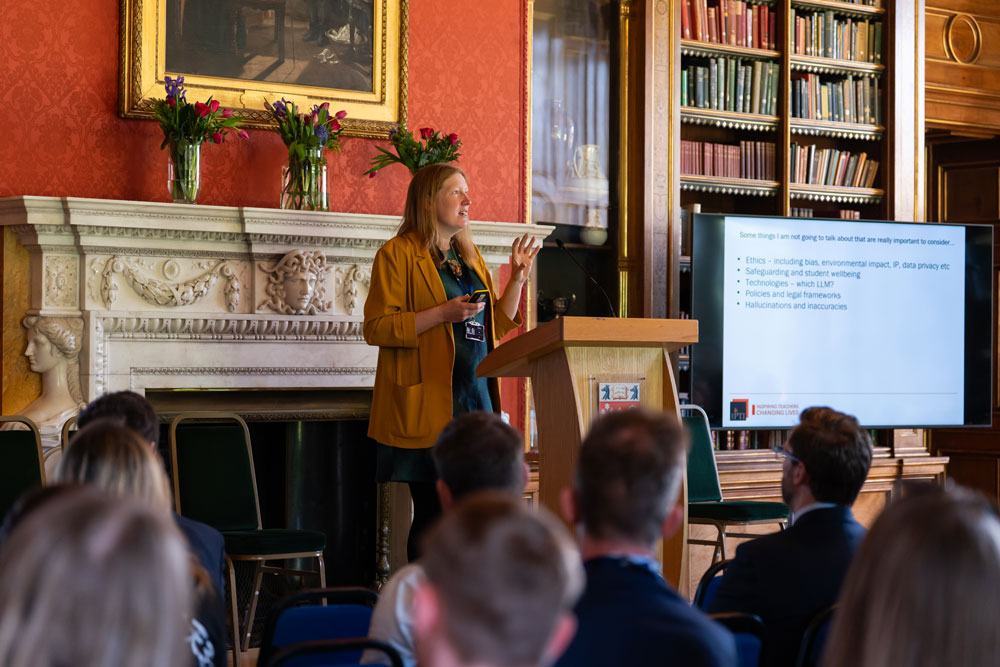
The conference was hosted by Simon Balderson, Wishford’s Director of Innovation, showcasing a suite of tools developed over the past year; practical applications built with and for educators, and offered as a collaborative resource for the wider sector.
Among them: Sophia, a personalised AI study partner for pupils and staff, designed around metacognitive thinking and Socratic dialogue, and integrated with tools such as school management systems. Repetita, a flashcard app built on spaced repetition, puts cognitive science directly in pupils’ hands. Ample is a multi-agent tool providing detailed, structured feedback on A Level English essays. The Prompt Directory gives teachers a space to share AI prompts that have genuinely worked in practice.
The talk came with an open invitation for collaboration. We are entering an era of agentic AI, in which schools have a real opportunity to build tools tailored to their own communities, not simply waiting for the technology giants to hand them something off the shelf.
What Is Education Actually For?
Dr Cat Scutt, CEO of the PTI, brought both challenge and clarity to one of the day’s central debates. Drawing on her extensive work in teacher development, education research and edtech, she pushed delegates to reflect on the fundamental purpose of education, and on whether current approaches to CPD are remotely adequate for the scale of change underway. The tension between knowledge acquisition and the development of so-called ‘soft skills’ sparked lively discussion amongst delegates throughout the day and beyond.
AI at the Edge
One of the most technically striking sessions came from Isaac Pattis of Oxford University Press, who demonstrated a Large Language Model running directly within a web browser, with no data sent to a remote server, or reliance on the hyper-scaling tech giants. It was a glimpse of what is possible when AI is built to run locally on devices, and the implications are significant. If powerful AI tools can operate without internet dependency, the barriers of access and equity that currently shape the edtech landscape begin to look very different. For schools in areas of poor connectivity, or institutions rightly cautious about data privacy, this is a genuinely exciting alternative.
Rethinking the Model
Dr Rebecca Torrance-Jenkins offered one of the most provocative visions of the day: a new kind of school, grounded in neuroscience and anthropology, that moves decisively away from what she described as the Victorian model of education. She argued that this inherited model is directly implicated in the mental health crisis, rising school avoidance and the widespread motivation problem facing teachers today, making a case that was both challenging and, for many in the room, recognisable. AI, in her framing, is not the problem but potentially part of the solution: a tool that, used well, could help schools build environments far better suited to how young people actually learn and thrive.
Human Creativity in the Age of Machines
Perhaps the most exhilarating session of the day came from Ian Comely, Oscar-nominated VFX Co-ordinator at Industrial Light and Magic. With credits spanning Star Wars, Guardians of the Galaxy, The Creator and ABBA Voyage, Ian offered a window into what human creativity looks like when it works alongside, rather than against, extraordinarily capable technology.
His insights cut to the heart of one of education’s most pressing questions: what do we actually want young people to be able to do? The answer, in his world, is to think laterally, solve novel problems, and bring imagination to bear, supported by the latest technology. It was an inspirational reminder that the future belongs not to those who resist technology, but to those who have the creativity and confidence to direct it.
Emergent Bias
Victoria Hedlund, founder of GenEd Labs, brought a note of important caution. Her session examined the inherent bias embedded in Large Language Models and demonstrated how that bias can emerge unexpectedly in educational outputs. The results were striking: when resources were targeted at boys or girls specifically, or when particular names were used in prompts, the outputs shifted in ways that were sometimes subtle, sometimes worryingly clear. For schools already grappling with questions of inclusion and representation, this is not an abstract concern. It is something that needs to be actively understood and managed.

Looking Forward
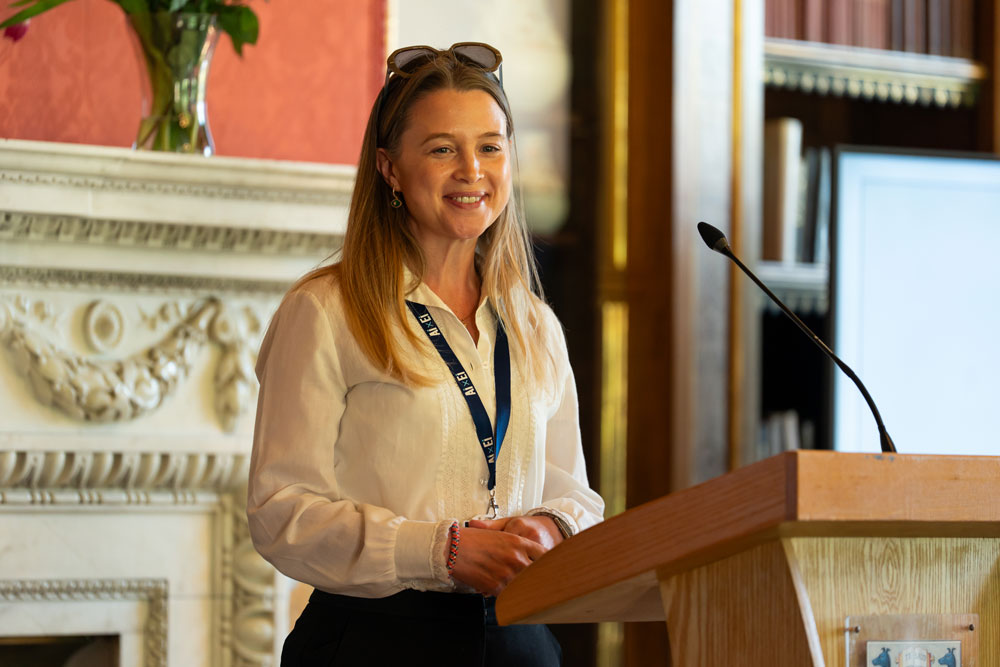
The day closed with a panel discussion including Dina Porovic, Head of Westonbirt School, and Dawn Taylor, founder of Challenge Innovate Grow, reflecting on the themes that had emerged and considering what practical next steps look like for school leaders navigating an era of rapid change. There are no easy answers, but there was a shared conviction that the conversation needs to keep happening, and that schools which engage seriously with these questions will be far better placed than those that don’t.
The conference also saw the launch of the Wishford Journal of Innovation in Education, a new publication open to submissions from across the education community. Volume 1 covers topics ranging from sustainability and AI literacy to the future of the arts and AI’s impact on language learning. Every delegate received a printed copy, produced by print sponsors Corsham Print, and the journal will continue to grow as a resource for the field.
The AI x EI Conference was made possible with the generous support of Gold Sponsors iSAMS, whose new AI enhancements including an MCP interface for local development generated considerable interest among delegates, and food sponsors Chapter One, whose catering was, by all accounts, a thoroughly enjoyable highlight of the day in its own right.
The Wishford Centre for Innovation is open for collaboration, asking the important questions that every school will need to answer, in the near future.
To find out more about the Centre, submit to the Journal, or register interest in next year’s conference, please get in touch.